
Introduction
What Is the Best Baby Food to Introduce First? A Parent’s Complete Guide Starting your baby’s solid food journey is one of the most exciting milestones for every parent. Around 6 months of age, babies are usually ready to explore foods beyond breast milk or formula. Choosing the right first food can help support healthy growth, brain development, and good eating habits.shop now
In this guide, we’ll answer common questions like:
- What is the best baby food to introduce first?
- What food is good for a first-time baby?
- What is the 3-6-9 rule for babies?
- What’s the best food to feed a baby when they first eat?
What Is the Best Baby Food to Introduce First?
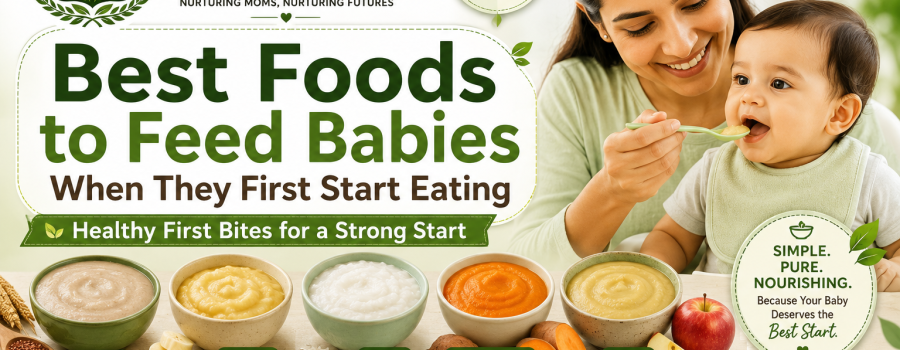
The best first foods are soft, smooth, easy to digest, and rich in nutrients. Some excellent options include:shop now
- Ragi (Finger Millet) Porridge
- Rice Cereal
- Mashed Banana
- Steamed and Mashed Sweet Potato
- Apple Puree
- Carrot Puree
- Avocado Mash
Among these, ragi porridge is a favorite because it is naturally rich in calcium, iron, and dietary fiber, making it a wholesome first food for growing babies.
What Food Is Good for a First-Time Baby?
When introducing solids for the first time, keep it simple and offer only one new food at a time.
Good starter foods include:
1. Ragi Porridge
Easy to digest and packed with essential nutrients.
2. Banana Mash
Naturally sweet, soft, and rich in potassium.
3. Rice Cereal
Gentle on a baby’s digestive system.
4. Sweet Potato Puree
Contains Vitamin A and natural antioxidants.
5. Apple Puree
Provides vitamins and a mild flavor babies usually enjoy.
What Is the 3-6-9 Rule for Babies?
Many parents refer to the 3-6-9 approach as a gradual feeding guideline:
Around 3 Days
Introduce only one new food and observe your baby for any allergic reactions.
Around 6 Months
Begin complementary feeding while continuing breastfeeding or formula feeding.
Around 9 Months
Introduce a wider variety of soft foods and encourage self-feeding with age-appropriate textures.
Always consult your pediatrician if you have concerns about allergies or feeding schedules.
What’s the Best Food to Feed a Baby When They First Eat?
For the very first meal, choose foods that are:
- Smooth in texture
- Easy to swallow
- Free from added sugar and salt
- Freshly prepared
- Rich in natural nutrients
A homemade ragi porridge made from premium-quality ragi powder can be an excellent choice for many babies beginning solids.
Tips for Introducing First Foods
- Start after your baby completes 6 months (unless advised otherwise by your doctor).
- Offer only 1–2 teaspoons initially.
- Introduce one new food every three days.
- Avoid honey, added sugar, and salt during the first year.
- Never force-feed your baby.
- Continue breastfeeding or formula feeding alongside solids.
Why Parents Love Ragi for Babies
Ragi is considered one of the most nutritious grains for infants because it is naturally rich in:
- Calcium for healthy bones
- Iron for growth and development
- Dietary fiber for digestion
- Plant-based nutrients that support overall wellness
Using clean, hygienically prepared ragi powder helps parents prepare healthy porridge quickly at home.
Conclusion
The first foods you introduce can lay the foundation for healthy eating habits. Soft, nutritious options like ragi porridge, banana mash, and rice cereal are excellent choices for babies beginning their solid food journey.
At JMJ Moms Choice, we believe every baby deserves wholesome, carefully prepared nutrition made with love. Choosing natural ingredients and introducing foods gradually can help your little one enjoy a healthy start to life.
Frequently Asked Questions
Q: When should I start solid foods for my baby?
Most babies are ready around 6 months of age.
Q: Can ragi be given as a first food?
Yes, properly cooked ragi porridge is widely considered a nutritious first food for babies.
Q: How much should I feed initially?
Start with 1–2 teaspoons and gradually increase based on your baby’s appetite.
Q: Should I add sugar or salt?
No. Babies under one year do not need added sugar or salt in their food.
