Introducing solid foods is an exciting milestone in your baby’s growth journey. At 6 months of age, babies need additional nutrients along with breast milk or formula to support healthy development. Choosing the right foods can help build good eating habits and provide essential vitamins and minerals.
In this guide from JMJ Moms Choice, we answer some of the most common questions parents ask about feeding babies after 6 months.
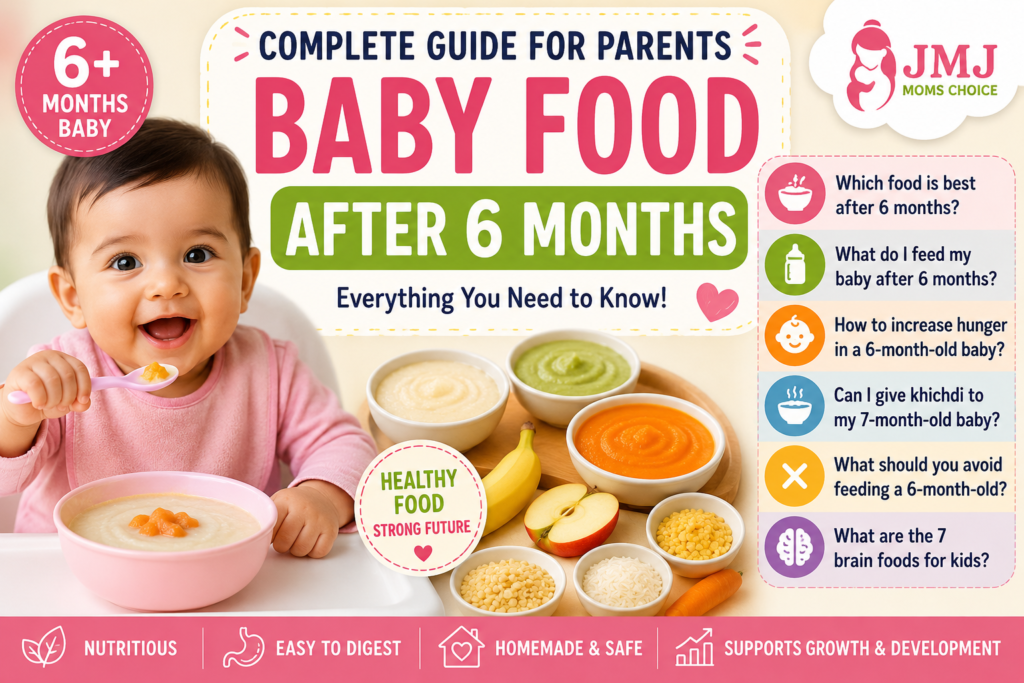
1. Which Food Is Best for a Baby After 6 Months?
The best first foods are soft, nutritious, and easy to digest. They should provide energy while introducing your baby to different tastes and textures.
Some excellent first foods include:
- 🌾 Ragi (Finger Millet) Porridge
- 🍌 Mashed Banana
- 🍎 Apple Puree
- 🥕 Carrot Puree
- 🎃 Pumpkin Mash
- 🍠 Sweet Potato Mash
- 🍚 Rice Porridge
- 🥣 Homemade Cereal Mix
- 🫘 Moong Dal Puree
- 🥑 Avocado Mash
Introduce one new food at a time and observe your baby for any allergic reactions before trying another.
2. What Do I Feed My Baby After 6 Months?
A balanced diet should include grains, fruits, vegetables, and protein-rich foods while continuing breastfeeding or formula feeding.
Sample Meal Plan
Morning
- Breast milk or formula
- Mashed banana
Mid-Morning
- Ragi porridge
Lunch
- Soft rice with moong dal mash
Evening
- Apple puree or steamed fruit mash
Dinner
- Vegetable puree or homemade cereal
Every baby is different, so feed according to your baby’s appetite and developmental readiness.
3. How to Increase Hunger in a 6-Month-Old Baby?
Many parents worry when their baby eats only a small amount. In most cases, this is completely normal.
Tips to Encourage Healthy Appetite
✔ Follow a consistent feeding schedule
Regular meal times help babies develop hunger cues.
✔ Avoid force feeding
Let your baby decide how much to eat.
✔ Encourage active play
Physical activity naturally improves appetite.
✔ Offer different textures and flavors
Variety keeps meals interesting.
✔ Avoid filling up on milk immediately before solids
Leave enough time between milk feeds and solid meals.
If your baby consistently refuses food or is not gaining weight, consult your pediatrician.
4. Can I Give Khichdi to My 7-Month-Old Baby?
Yes! Homemade khichdi is one of the best foods for babies around 7 months.
It is:
- Easy to digest
- Rich in carbohydrates and protein
- Soft and smooth
- Gentle on the stomach
Simple Baby Khichdi Recipe
Ingredients
- 2 tablespoons rice
- 1 tablespoon moong dal
- Small pieces of carrot or pumpkin
- Water
Cook until very soft and mash before serving.
Avoid adding spices, excess salt, or artificial seasonings.
5. What Should You Avoid Feeding a 6-Month-Old Baby?
Certain foods are not suitable for babies because they may cause choking or digestive problems.
Foods to Avoid
❌ Honey before 12 months
❌ Whole nuts
❌ Popcorn
❌ Hard candies
❌ Excess salt
❌ Added sugar
❌ Soft drinks
❌ Packaged junk food
❌ Highly processed snacks
❌ Large pieces of raw fruits or vegetables
Always supervise your baby during feeding and prepare foods in a soft texture.
6. What Are the 7 Brain Foods for Kids?
Proper nutrition plays an important role in supporting healthy brain development.
1. Ragi (Finger Millet)
Rich in iron and calcium, supporting healthy growth and development.
2. Eggs
Provide high-quality protein and choline.
3. Bananas
Offer natural carbohydrates and vitamin B6.
4. Almonds
Contain healthy fats and vitamin E (serve as powder or paste for young children).
5. Yogurt
Provides protein and calcium.
6. Green Leafy Vegetables
Rich in iron and folate.
7. Fatty Fish
Contains omega-3 fatty acids that support brain health in age-appropriate children.
Remember that no single food boosts intelligence. A balanced diet combined with good sleep, play, and a nurturing environment supports healthy development.
Final Thoughts
Starting solids after 6 months is an important step in your baby’s journey toward healthy eating. Focus on fresh, homemade, nutrient-rich foods while introducing new ingredients gradually.
At JMJ Moms Choice, we believe every child deserves wholesome nutrition made with care. Explore our range of natural baby food products designed to support your little one’s healthy growth and development.
Disclaimer: This article is for educational purposes only and should not replace professional medical advice. Always consult your pediatrician before making significant changes to your baby’s diet.